
This 10-day intensive course gives students practical, hands-on experience applying AI across real business contexts. Each day blends conceptual understanding with immediate application – students explore both the business impact of AI tools and the technical mechanics that make them work, calibrated to the group’s background.
Through daily projects, case studies, workshops, and a group capstone, every student — regardless of technical background — will leave able to identify, design, and deploy AI solutions that create measurable business value.
Course term:
Available seats:
Price:
Category:
Status:
Deadline:
Course term: 02. 08. – 13. 08.
Available seats: 15
Price: 850 €
Category: Bussiness & Marketing
Status: Early Bird
Deadline: 30.04.2027

| → Welcome session: student introductions, background survey, expectations check |
| → What is AI and how do LLMs actually work? — visual, conceptual explainer for all backgrounds |
| → Live comparison demo: ChatGPT vs Claude vs Gemini on the same real-world task |
| → Hands-on: every student uses AI to complete a genuine work or study task |
| → Group project brief introduced; teams formed based on interests and backgrounds |
| → Daily stand-up format explained; team project boards set up |
| → Why prompt design matters: how small changes in wording produce radically different outputs |
| → Core techniques: persona framing, chain-of-thought, few-shot examples, format instructions |
| → Business prompting: templates for HR, marketing, finance, and operations tasks |
| → Technical depth: system prompts, structured JSON outputs, and API basics for those who want to go further |
| → Workshop: each student builds a personal prompt library for their own domain or function |
| → Group project: teams apply prompting techniques to their chosen business problem |
| → Content at scale: how AI drafts, personalises, and optimises marketing copy across channels |
| → Customer insight tools: sentiment analysis, segmentation, and AI-powered research |
| → Hands-on: design an AI-powered campaign — brief, content variations, and channel plan |
| → Technical angle: connecting a content pipeline to an API or CMS using automation |
| → Case study: real brand AI implementations — what worked, what failed, and why |
| → Group project checkpoint: teams apply today’s tools to their own use case |
| → What is workflow automation and why it matters more than any single AI tool |
| → Make.com walkthrough: triggers, actions, filters, AI modules — no code required |
| → Hands-on: build a working automation (e.g. email classification → drafted reply → logged to sheet) |
| → n8n introduction: self-hosted workflows and HTTP nodes for those wanting more control |
| → Business use cases by department: HR onboarding, finance reporting, ops alerts, marketing scheduling |
| → Group project: each team designs and begins building an automation relevant to their use case |
| → AI in finance: forecasting models, anomaly detection, fraud screening — intuition and tooling |
| → AI in HR: job description generation, resume screening pipelines, onboarding automation |
| → AI in operations: demand forecasting, predictive maintenance, scheduling assistants |
| → Hands-on: build or configure an AI workflow for one of these functions using Make.com + an LLM |
| → Case studies: how organizations deploy AI in HR and finance today |
| → Group project: teams extend their automation or prototype into a chosen business function |
| → What happens to your data when you use ChatGPT, Claude, or Gemini — a practical audit |
| → GDPR and data residency: what to check before using any AI tool with company or customer data |
| → AI in legal and compliance: contract review, regulatory monitoring, risk flagging |
| → Bias in AI: how it enters models, how to detect it, and what to do about it |
| → Responsible AI checklist: transparency, accountability, and fairness in practice |
| → Workshop: privacy audit of your own AI tool stack — what should you stop, start, or change? |
| → Group discussion: ethics case studies drawn from real business deployments |
| → What are AI agents? How they differ from chatbots — planning, tool use, and multi-step reasoning |
| → Real-world agent use cases: research agents, scheduling agents, reporting agents, coding agents |
| → Live demo: an AI agent that browses, summarises sources, and produces a structured report |
| → Hands-on — accessible track: map out an agentic workflow for your department using a visual planner |
| → Hands-on — technical track: explore LangChain or CrewAI basics; explore a simple tool-calling agent |
| → Business examples: Salesforce Einstein, Microsoft Copilot agents, Google Agentspace |
| → Group project: teams identify where an agent could accelerate their capstone use case |
| → The AI Canvas and FASt framework: a structured way to evaluate any AI opportunity |
| → Build vs buy vs configure: decision framework with worked examples |
| → Integrating AI into existing processes: where to start, how to sequence, what to measure |
| → Change management for AI adoption: handling resistance, upskilling teams, governance basics |
| → Group project deep-dive: teams develop their full AI implementation plan with instructor support |
| → 1-on-1 check-ins: 15-minute sessions with each group to refine direction and sharpen the pitch |
| → Full-day group project work session — no new content, full focus on creating |
| → Morning stand-up: each team commits to specific, deliverable outcomes for the day |
| → Rolling 20-minute mentoring slots with instructor — book by mid-morning |
| → Mid-day peer review: groups swap draft presentations for structured critique using a shared rubric |
| → Afternoon: final polish on slides, demos, business case narrative, and impact estimates |
| → Optional drop-in: technical office hours for automation, API, or tool questions |
| → Group presentations: 15 minutes per team + 5 minutes Q&A from peers and instructor |
| → Each presentation must cover: problem, AI tools used, automation built, business impact, risks addressed |
| → Peer scoring: structured rubric tied to course learning outcomes |
| → Instructor feedback: individual strengths and areas for growth |
| → Course wrap-up: key takeaways and a forward look at where AI is heading in the next 12 months |
| → Graduation, certificate distribution, and closing celebration |
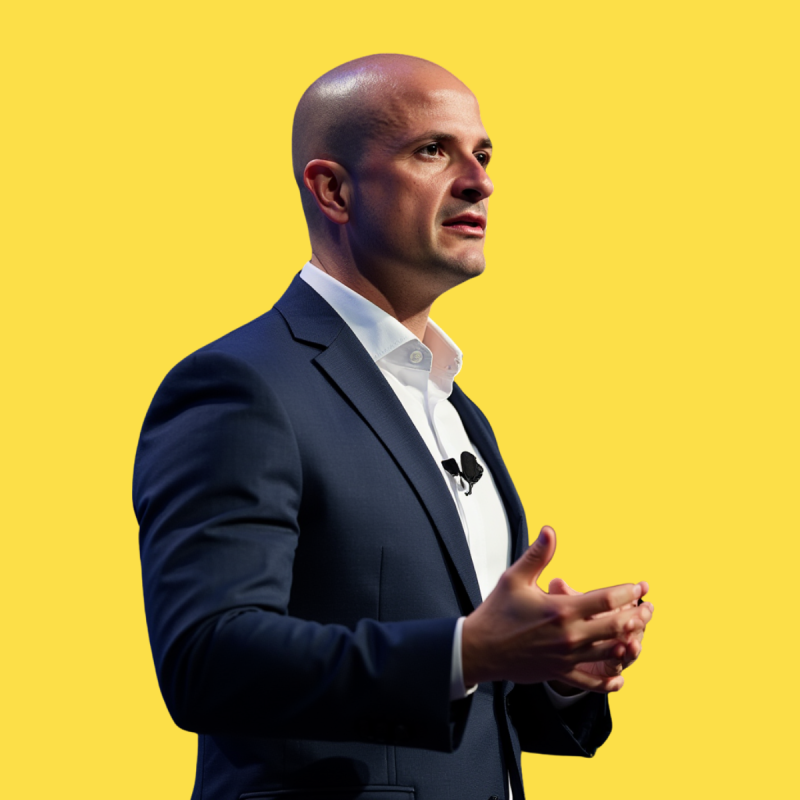
University of Sydney
Lecturer and Entrepreneur
Felipe Rego is an AI, data science, analytics, and data visualisation specialist who helps organisations turn emerging technologies into practical business capability. His work focuses on applied AI, data strategy, analytics, business intelligence, and data storytelling, supporting organisations as they explore how to use AI responsibly, effectively, and with clear business purpose.
Felipe is also a global educator and speaker, delivering practical and engaging programs on AI literacy, AI for productivity, data visualisation, analytics, and storytelling with data. He works with professionals and leadership teams to build confidence in using AI tools, understanding AI opportunities and risks, and translating complex data and technology concepts into clear decisions and actions.
He is the author of Sketch Your Data, a unique sketchbook designed to help professionals plan and design impactful data visualisations and storytelling ideas. Felipe holds an M.Phil. in Electrical and Information Engineering from the University of Sydney, is a Cloud Engineer, and has served as an advisor to an Australian government department.


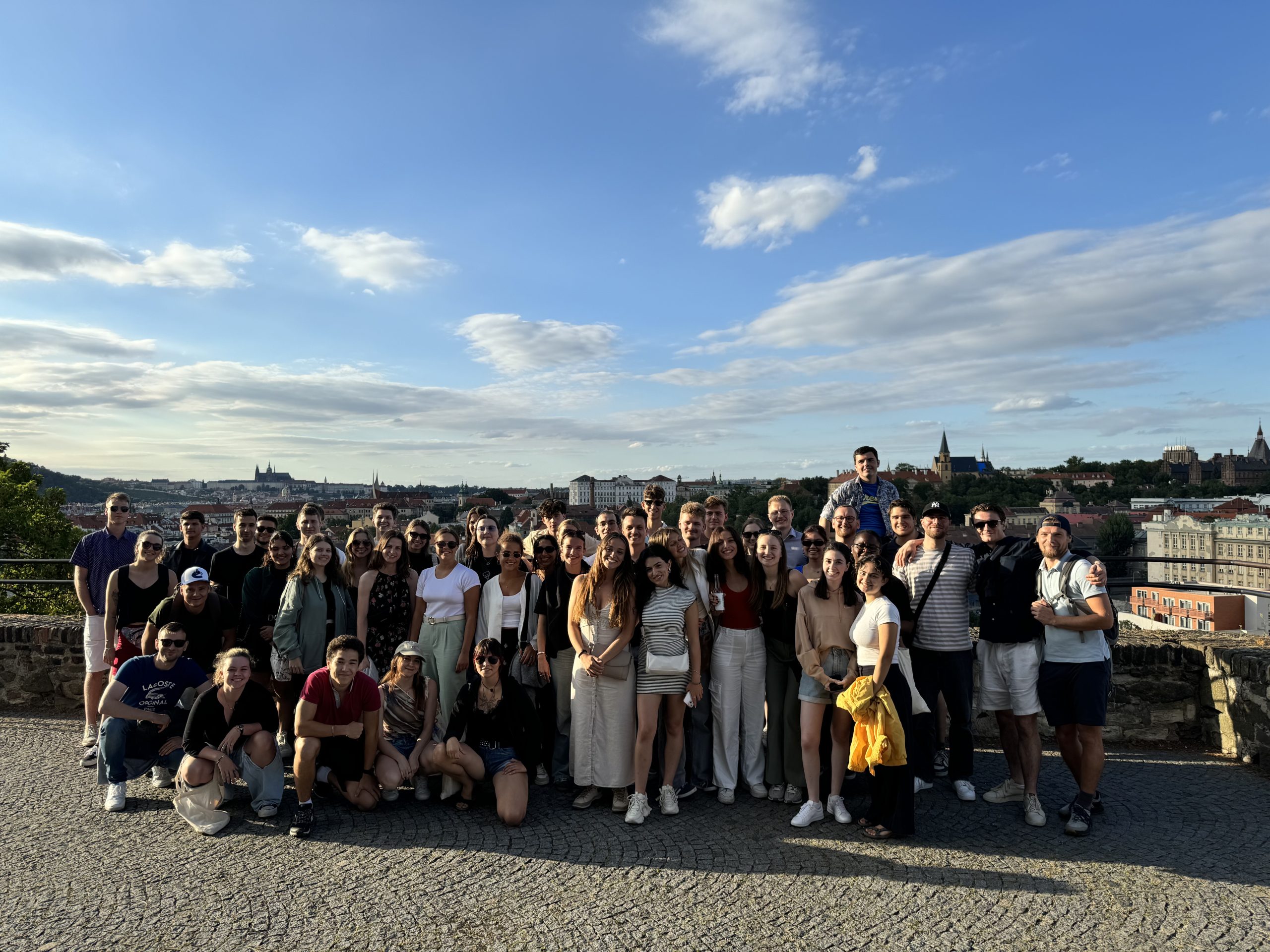
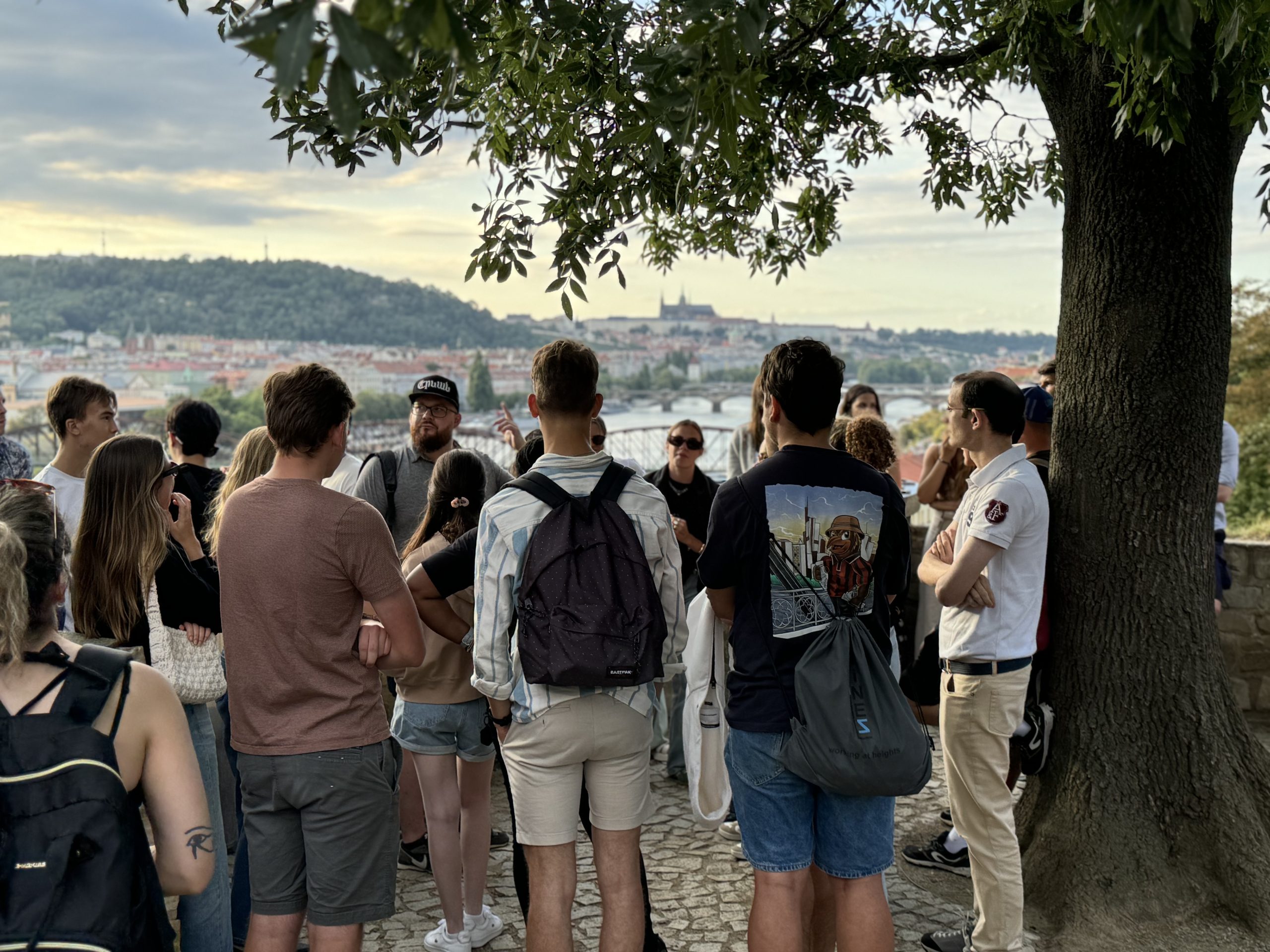
Course fee includes the course itself, application fee, study materials, afternoon/evening social activities and events, welcome and goodbye drink as part of the graduation party. Other expenses, such as meals, accommodation, insurance, personal expenses, public transportation ticket, extra activities (such as trips outside of town over the weekend and entrance fees), and required equipment (i.e. pencils, paper for illustrations) are not included in the price.
Please note, after the 30th of April 2027 there will be a late enrollment fee charged in the amount of 100EUR on top of the course fee.

Feel free to contact our coordinator:
Andrea Josífková
Coordinator
+420 777 879 192
info@europeansummerschool.com

Linda Farinello
Summer school in Prague was a great experience, I really liked it and I enjoyed it. I recommend it to everyone, especially for the nice people you meet!

Sonia Roopra, UK
I had the pleasure of undertaking the business management course in August 2021. I cannot recommend ESS enough! The activities schedule was structured perfectly, it was a great mix of it being both educational and enjoyable. All the staff are very knowledgeable and highly qualified. I really recommend this great experience to everyone. I feel grateful to have met lifelong friends from all over the world who I still keep in touch with to this day!

Jannik Golletz
Well organized programms and very friendly and engaged programme coordinators. I can only recommend, had a really great time with them.

Mary Corcoran
Amazing experience! This program was exactly what I was looking for as it offered the perfect balance between class and fun activities/excursions to ensure that we experienced all that Prague has to offer. I took the digital graphics class and cannot believe how much I learned in only two weeks. Highly recommend this opportunity to meet some amazing people, form lasting friendships, explore an enchanting city, and learn new skills!